
You budgeted for the unexpected. You set aside contingency, probably 10 percent, maybe more on a complex job. You've done this long enough to know that something always comes up.
And yet, here you are again. Three quarters through the project and the contingency is gone, or nearly gone, and you're having a conversation with leadership that you didn't want to have.
This isn't bad luck. And it probably isn't bad estimating either.
It's a visibility problem. And it shows up on almost every capital program that has grown beyond what one person can track in their head.
| 80% |
|---|
| Large construction projects typically run 80% over budget and 20% over schedule. |
| Source: McKinsey |
The Problem Isn't the Surprise. It's When You Find Out About It.
In construction project management, surprises are part of the job. Subsurface conditions don't match the geotech report. A subcontractor's scope has a gap nobody caught at bid time. Material lead times shift and something has to be resequenced. An RFI answer comes back and it's not what anyone was expecting.
None of that is unusual. What separates programs that stay on budget from programs that don't is almost never the absence of surprises. It's how quickly those surprises surface, and whether there's still time to do something about them when they do.
The gap between when something happens in the field and when it shows up in your budget is where contingency goes to die.
A change order gets verbally approved on site. The contractor keeps working. Two weeks later someone remembers to log it. By then, three more things have happened that nobody's logged yet either, and your budget reflects a project that existed a month ago.
That's not a contractor problem or a project manager problem. It's what happens when financial tracking and project communication live in different places: spreadsheets, email threads, shared drives, contractor platforms. Nobody has a complete picture at any given moment.
"We rely heavily on spreadsheets, but they don't always reflect the latest information."
This is one of the most common things capital program managers say when asked how they track costs. Not because they haven't tried to find something better. But because the spreadsheet is familiar, flexible, and free, right up until the moment it isn't.
How Contingency Actually Gets Spent
Most capital program managers have had this experience: you get to the end of a project and try to reconstruct where the contingency went. You find it scattered across a dozen small decisions, a handful of change orders here, some additional scope there, a few RFIs that turned into cost events, some overtime that was approved over the phone and never formally logged.
Individually, none of them were alarming. Collectively, they cleaned out the contingency before anyone noticed the pattern.
This is one of the most consistent pain points in construction risk management: it's not the one big hit that kills the budget. It's the accumulation of small ones that nobody was watching closely enough to flag.
| 35% |
|---|
| The average construction project experiences a 35% increase in scope from original contract to closeout. |
| Source: FMI |
There's also a timing problem. Cost commitments happen in the field long before they show up in any financial report. A subcontractor orders materials against a verbal direction. A crew stays late to hit a milestone. A change in scope gets discussed in a site meeting and documented in someone's notes but never formally processed. By the time any of that reaches the spreadsheet, if it ever does, the money is already committed.
"Most communication happens through email, which makes it hard to track decisions later."
That's the mechanism. The change order that got discussed on a site walk and followed up in an email chain. The direction that seemed minor at the time. The approval that everyone remembers differently six months later. When decisions live in inboxes instead of a shared record, the financial picture is always running behind the reality on the ground.
When you're managing multiple capital projects simultaneously, this lag compounds. You're not just tracking one set of moving pieces. You're tracking ten or fifteen, each with their own contractors, their own RFI logs, their own change order histories. The information exists. It just lives in too many places to give you a reliable picture of where things actually stand.
What Early Warning Actually Looks Like
"Better visibility" gets thrown around a lot in conversations about construction cost management, but it's worth being specific about what that actually means in practice.
Early warning on cost risk isn't about more reports. Most capital program managers are already drowning in reports. It's about the right information reaching the right person while there's still a decision to be made.
That means a few specific things:
Change orders tracked in real time, not at month end. Every potential cost event, approved, pending, or under discussion, should be visible against the budget as soon as it's identified. Not after it's been through three rounds of email.
RFIs connected to cost impact. Not every RFI becomes a change order, but some of them do, and you want to know which ones are trending that way before they do. If your RFI log and your budget live in different places, that connection never gets made until it's too late.
Commitments captured when they're made. The gap between a verbal direction in the field and a logged cost commitment is where a lot of contingency disappears. Closing that gap means having a way for the people making decisions in the field to record them somewhere the PM can actually see.
A clear picture of what's left. At any point in the project, you should be able to answer two questions quickly: how much contingency has been committed, and how much is still available. If that answer takes more than a few minutes to pull together, your tracking system is working against you.
"PM software is only as good as the person and information that is entered."
That's true, and it's worth saying plainly. A better system doesn't fix a culture where cost events go unreported or decisions get made without documentation. But a system that's hard to use, or that lives separately from where people are already working, makes that problem worse. The goal is something that fits how the team already operates, so that capturing information is the path of least resistance rather than an extra step nobody takes.
Further Reading: What Is Construction Cost Management? And Why Most Programs Get It Wrong A plain-language breakdown of what construction cost management actually involves, and where most capital programs lose control of the numbers.
The Contingency Isn't the Problem
Here's the thing worth sitting with: if your contingency keeps running out, adding more contingency next time isn't the fix. It's just a bigger buffer for the same leak.
The programs that consistently deliver on budget aren't the ones with the most contingency. They're the ones where cost events surface early enough that there's still room to respond. Adjust scope, resequence work, have a conversation with the owner before it becomes a crisis.
That kind of predictability doesn't come from better estimating at the front end. It comes from better tracking through the middle of the job, when the decisions that determine the final number are still being made.
Construction budgeting software and project management tools have gotten a lot better at this, connecting field activity to financial tracking so the numbers reflect what's actually happening, not what happened two weeks ago. But the tool is only part of it. The bigger shift is organizational: making sure that cost-relevant information gets captured close to when it happens, by the people closest to the work, in a way that the program manager can actually see and act on.
A Note on Portfolio Programs
Everything above applies to a single project. Multiply it across a capital program with ten or fifteen active jobs and the stakes go up considerably.
When each project is running its own spreadsheet, its own change order log, its own communication thread, the program manager has no reliable way to see the portfolio as a whole. Which projects are burning through contingency faster than expected? Where are the cost risks concentrating? Which jobs need attention this week?
"It's difficult to get a quick picture of where everything stands."
In a single-project environment that's an inconvenience. Across a capital program it's a real liability. Leadership is asking questions, auditors are asking questions, and the answers are buried in a stack of separate files that each tell part of the story.
Those questions should have fast answers. In most public capital programs, they don't, not because the information doesn't exist, but because assembling it from a dozen different sources takes long enough that by the time the picture comes together, it's already out of date.
| $177B |
|---|
| Bad project data and miscommunication cost the US construction industry an estimated $177 billion annually. |
| Source: FMI |
That's the problem that building construction project management at scale has to solve. Not just tracking costs on individual projects, but maintaining a clear, current view of financial health across the whole program.
What This Means for Your Program
If your contingency is consistently running out before the end of your projects, the first question worth asking isn't how much contingency to budget next time. It's: at what point in the project do cost problems become visible to me?
If the answer is "when someone brings them to me" or "when I pull the monthly report," that's the gap worth closing.
The next post in this series looks at the tool most capital programs are relying on to manage this, and the specific moment when it stops being enough.
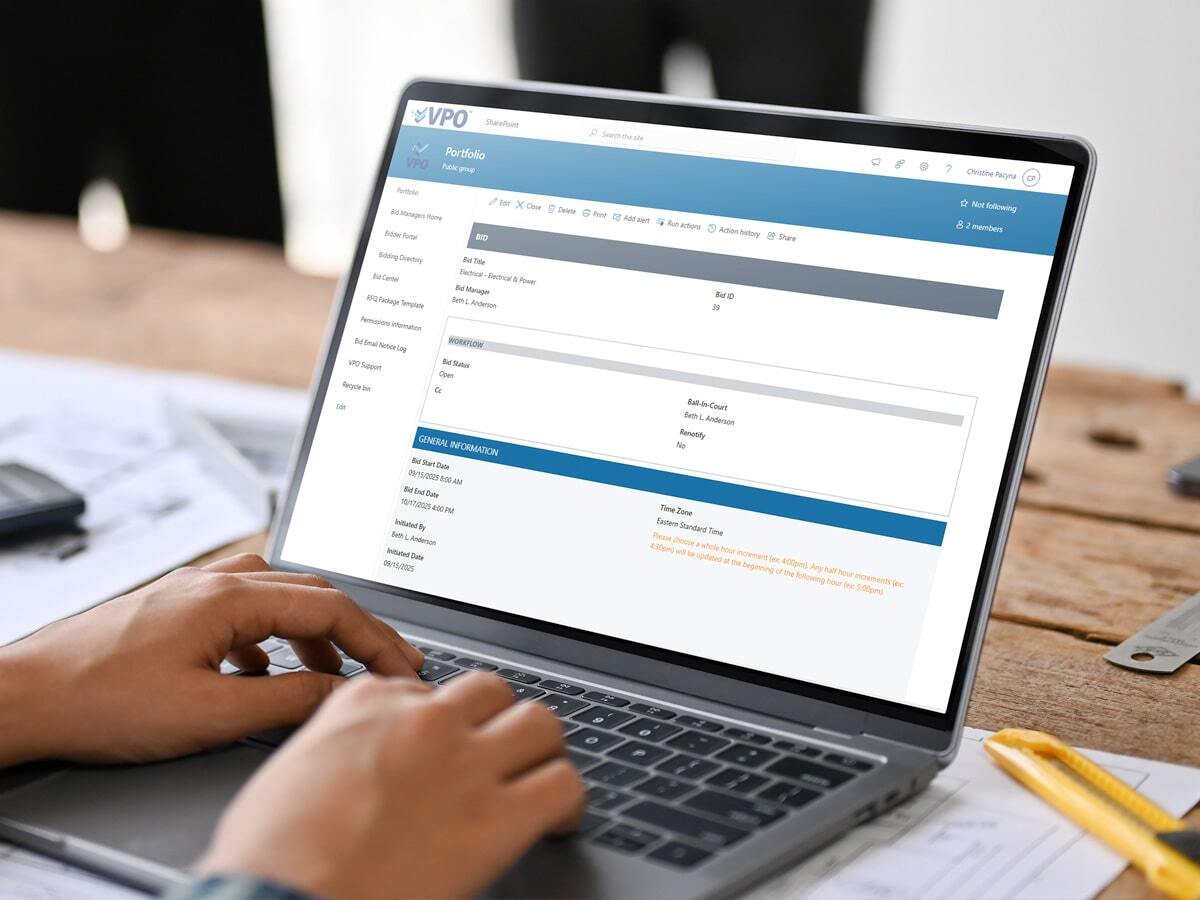
If you're managing a capital program and want to see how VPO keeps cost tracking, communication, and documentation in one place, book a demo.