
Table of Contents:
- Project Management vs. Portfolio Management
- Five Signs You’ve Outgrown Spreadsheets
- Sign #1: You’re Managing 5+ Active Projects
- Sign #2: Email Has Become the System of Record
- Sign #3: You Can’t Confidently Answer “What’s at Risk?”
- Sign #4: Stakeholder Communication Takes Constant Effort
- Sign #5: IT Adoption is a Barrier
- What’s Next: Portfolio Management Solutions for Owners
Spreadsheets are often the first tool teams reach for in project management. They're familiar, easy to use, and effective for organizing small scale projects.
But as capital programs grow, the demands change. You’re no longer tracking individual projects. You’re coordinating multiple teams and partners, managing large-scale funding, and answering big-picture questions from leadership.
For more than 40 years, we’ve seen this pattern again and again. Organizations move from managing a handful of projects in spreadsheets to overseeing dozens, sometimes hundreds, of active projects.
If you’re a public utility managing a capital improvement program, a manufacturing organization overseeing facility expansions, or any organization juggling multiple construction projects, you’ve likely experienced these limitations firsthand.
This blog will help you recognize five signs you’ve outgrown spreadsheets and introduce a more effective, scalable approach to capital program management.
Project Management vs. Portfolio Management:
A Tactical vs. Strategic Focus to Project Delivery
Before we dive into the warning signs, it helps to define the difference between project management and portfolio management.
Project Management vs. Portfolio Management Comparison Chart
Project Management: Tactical Focus
|
Portfolio Management: Strategic Focus
|
 Project management is focused on delivering a single project. The work is strictly tactical. Teams are responsible for schedules, budgets, and scope, with a singular goal: completing the project.
Portfolio management takes a more strategic focus. Instead of asking how a single project is performing, teams evaluate how projects group together, how leaders allocate funding, where resource constraints exist, and how the entire program tracks at any given time.
This shift in focus is where many organizations start to feel process strain. Teams are stuck using project-level tools to answer portfolio-level questions. Visibility becomes harder to maintain, and decisions take longer because updates require hours of manual work.
Portfolio management provides centralization across individual projects, allowing leaders to see trends, manage priorities, and make decisions faster.
Five Signs You’ve Outgrown Spreadsheets
Based on our work with hundreds of organizations and research into common owner pain points, we’ve identified the five critical warning signs that an organization has outgrown spreadsheets.
Sign #1: You’re Managing 5+ Active Projects
When you’re overseeing one or two projects, spreadsheets are sufficient. You know where things stand and can answer questions quickly. But once you move beyond a handful of active projects, especially across different teams or locations, spreadsheets start to show their limits.
Project managers may be doing their jobs well at the individual project level, but no one has clear visibility across the entire capital program.
The Challenge:
- Information silos become inevitable
- PMs excel at individual projects
- Nobody sees the complete picture
- Executive questions take days to answer
Real-World Example:
Our client conducted progress meetings with his project management team every 2 weeks. Ahead of that meeting, the program lead asked each PM to update the same spreadsheet with the status of their projects. That spreadsheet became the single source of truth for leadership.
In theory, it worked. But in practice, it wasn’t sustainable.
Updates happened at the last minute, with dozens of people logging into the same file at the same time. The file crashed regularly. Updates conflicted. And the data was often incomplete or out of date.
As the program grew, more spreadsheets appeared. Consolidating them became a manual nightmare. But the real challenge was seeing all projects together in a way that supported smart spending decisions.
For owners managing multiple properties or facilities, this becomes a real problem. Capital budgets are finite, and critical financial decisions rely on a holistic view of the program. Spreadsheets can show pieces of the picture, but they make it extremely difficult to see how everything fits together.
Sign #2: Email Has Become the System of Record
Email is a great communication tool, but it was never designed to serve as a system of record. RFIs, submittals, approvals, and decisions often live in threads and attachments rather than in a centralized, shared location.
Over time, information becomes fragmented, and progress depends on knowing who to ask rather than knowing where to look.
The Challenge
- Email becomes the unintended system of record
- RFIs and submittals buried in threads
- New team members can’t find information
- Knowledge leaves when people leave
Real-World Examples:
One of the most common scenarios in which this challenge surfaces is when a team member is unavailable.
A project stalled when the PM went on vacation. Nobody could find the submittal approvals. They were in his email. The delay cost two weeks and significant contractor standby time.
The work didn’t stop because the team wasn’t capable. It stopped because the information wasn’t easily accessible. Teams had no central place to confirm approvals or understand current statuses. The team had to wait, and ultimately, the schedule (and bottom line) absorbed the impact.
This example illustrates the downside of relying on email to manage capital projects. It works until it doesn’t. And when it fails, it introduces unnecessary and costly delays. That’s why we encourage teams to think about email differently. Email is effective as a notification tool, a way to prompt action. It shouldn’t be the place where critical project information lives.
Sign #3: You Can’t Confidently Answer “What’s at risk?” in Real-Time
Imagine if your CFO asked right now, which projects in the portfolio are at risk of going over budget? Could you answer in minutes with confidence?
In our experience, this is where manual processes start to impact more than just efficiency.
The Challenge:
- Risk management becomes reactive, not proactive
- Problems discovered when it’s too late to fix cheaply
- Budget overruns found after money is spent
- Schedule delays identified after deadlines missed
Too often, project leaders lack a single, reliable view of risk. The information exists, but it’s spread across spreadsheets, documents, and finance systems.
So, when critical questions come up, teams scramble to find the latest updates, reconcile numbers, and confirm what’s current. By the time they have a clear picture, the opportunity to address the issue has usually passed.
When risk-related information isn’t centralized and updated in real time, even well-run teams struggle to answer basic questions quickly. And when those answers take too long, it becomes harder for leadership to make timely, informed decisions across the portfolio.
Sign #4: Stakeholder Communication Takes Constant Effort
As capital programs grow, stakeholder communication naturally becomes more complex. More people need visibility into what’s happening across projects, but for the people responsible for providing those updates, it quickly becomes a full-time job.
The Challenge:
- Different stakeholders need different views of same data
- Creating custom reports takes enormous time
- Information gets filtered and misinterpreted
- Political disconnects emerge without shared view
The Hidden Cost
Your talented project managers spend hours creating PowerPoints instead of managing projects. With portfolio-level visibility, you give each stakeholder exactly what they need, without manual reporting.
Organizations hire project managers for their experience and judgment. When they spend time compiling information, they lose the capacity to manage risk, coordinate teams, and stay ahead of issues.
One way organizations can begin to reduce this burden is by getting clear on what leadership consistently needs to see. Budget questions, for example, aren’t surprises. Knowing that allows teams to prepare those views in advance, rather than rebuilding them every time.
When data is centralized, communication becomes more straightforward and consistent. Stakeholders can access the information they need without relying on custom reports, and project teams can spend less time compiling updates and more time moving work forward.
Sign #5: IT Adoption is a Barrier
By the time organizations reach this point, there’s usually a shared understanding that existing processes aren’t keeping up with the portfolio's demands. But as teams start looking for better ways to manage their capital programs, IT adoption becomes a barrier.
The IT Challenge:
- IT hesitant to approve new platforms
- Security concerns and integration challenges
- Training and adoption become overwhelming
- Ongoing administration burdens IT teams
From an IT perspective, every new system adds complexity. More tools require more oversight, more support, and introduce more risk. Even when a new tool could improve capital program management, IT teams may hesitate to approve it.
In response, teams often try to solve problems locally. Smaller solutions are introduced to address immediate needs. Over time, this leads to shadow IT. While those workarounds may seem practical in the moment, they create real costs and long-term risk for the organization.
What we’ve seen work more effectively is shifting the conversation from individual tools to platforms. When technology choices align with how IT teams already operate, adoption becomes easier and more sustainable. And that alignment is often what allows organizations to move beyond spreadsheets without creating additional friction elsewhere.
The Solution: A More Scalable Approach to Capital Program Management
 Taken together, these five warning signs point to one core issue: visibility.
When information is scattered, coordination gets harder. When updates aren’t available in real time, decision-making slows. And when teams spend hours pulling reports together, there’s less time left to focus on moving the program forward.
That’s where a platform-based approach to capital program management makes a difference.
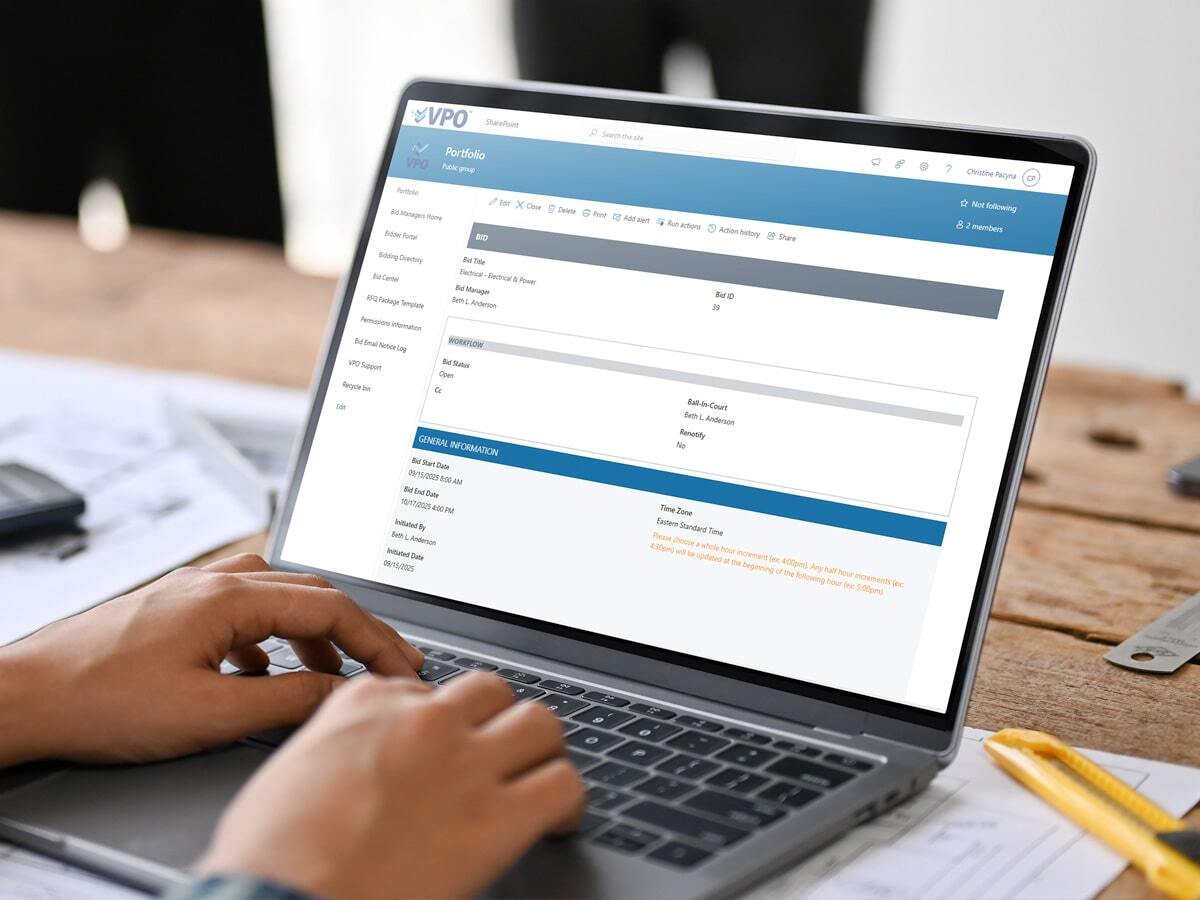
One advantage we see consistently is building portfolio management on Microsoft 365. For most organizations, it’s an environment IT already supports and trusts. With security and governance top of mind, working within a familiar platform removes a significant barrier to adoption.
More importantly, a platform scales. Individual tools may solve short-term problems, but they struggle to scale as programs grow. A platform provides real-time visibility across the portfolio, making it easier to coordinate teams, align stakeholders, and respond quickly when issues arise.
When data is centralized, teams stop chasing updates. Decisions shift from reactive to proactive. And time spent compiling updates gets redirected toward higher-value work.
If you’re starting to see these pressure points in your own capital program, the next step is to see what portfolio-level visibility looks like in practice.