
Project owners spend considerable energy managing risk during construction. Contracts get negotiated, insurance gets placed, contingencies get set. But some of the most consequential risk on a construction project accumulates before a single shovel hits the ground, and it accumulates quietly, in the preconstruction phase, on the owner's side of the table.
The construction industry is having an active conversation about preconstruction. General contractors are getting involved earlier. AI tools are generating estimates and schedules in a fraction of the time they used to. Tradespeople are being brought into design reviews to catch errors before they become field problems. By most accounts, the front end of a construction project is getting smarter and faster.
But there's a side of this story that isn't getting told, and it belongs to the owner.
Speed Is Compressing the Front End
Data center construction is the clearest example of what's happening across the industry right now. Owners are demanding compressed timelines. Power infrastructure needs to come online fast. The gap between design completion and construction start, once a buffer that allowed for careful review, coordination, and scope alignment, is shrinking.
According to Engineering News-Record's Top 400 data, the contractors winning in this environment are overwhelmingly those with data center contracts. Turner Construction reported nabbing 10 billion-dollar projects in the first part of 2026 alone, more than it won in all of 2025. The volume is real, and so is the pace.
When projects move this fast, the preconstruction phase doesn't disappear. It compresses. And when it compresses, the margin for coordination error shrinks with it.
AI Is Accelerating Output, But Not Necessarily Accuracy
The construction technology market has responded to compressed timelines with AI-powered estimating, scheduling, and preconstruction planning tools. The promise is real: these tools can generate in hours what previously took weeks.
But speed of output is not the same as quality of output. Burns & McDonnell, one of the country's largest engineering and construction firms, recently made headlines for a specific reason: they are deliberately involving experienced tradespeople in their preconstruction process to vet AI-generated suggestions. Their national director of preconstruction noted that jobsite professionals know when to push back on what the software recommends.
That's a telling data point. One of the most sophisticated contractors in the country recognized that AI tools were generating outputs faster than anyone could responsibly verify them, and their solution was to add human judgment back into the loop on the contractor side.
The question nobody is asking is: what's happening on the owner's side of that same equation?
Coordination Is Risk Management
When design and construction timelines compress and AI-generated documents move faster than they can be reviewed, someone has to be the intelligent client. Someone has to track what was agreed to, catch discrepancies between the contractor's assumptions and the owner's intent, manage scope changes before they calcify into change orders, and ensure that the documents moving through the process actually reflect what's being built.
This is not just a coordination function. It is a risk management function. Every unresolved RFI, every verbal scope change that never makes it into the contract documents, every AI-generated estimate built on assumptions the owner never reviewed, represents an unmanaged risk. Most of them will surface later, at higher cost, as change orders or disputes.
That function, covering coordination, document management, and scope control, is not a contractor responsibility. It's an owner responsibility. And yet the industry conversation about preconstruction improvements is almost entirely told from the contractor and technology vendor perspective.
Consider the specific risks that accumulate when owner-side coordination is weak:
- AI-generated estimates built on assumptions that don't match the owner's program
- RFIs that sit unresolved because no one is actively managing the response process
- Scope changes introduced verbally that never make it into the contract documents
- Change orders that arrive as surprises because early warning signals weren't tracked
None of these are new problems. But they become significantly more costly when the project is a $500 million data center where a month of delay has direct revenue consequences for the owner.
The Asymmetry Nobody Is Solving For
The construction technology market is largely selling to contractors. Estimating tools, scheduling software, preconstruction platforms: the pitch is almost always about making the contractor faster and more efficient. That's a legitimate value proposition.
But there's an asymmetry built into it. When a contractor's preconstruction process accelerates, the volume and velocity of documents, assumptions, and decisions flowing toward the owner increases proportionally. If the owner's capacity to process and respond to that volume doesn't keep pace, the efficiency gain on one side of the table creates a bottleneck on the other.
That bottleneck is where cost and schedule risk accumulates. Not because anyone made a bad decision, but because decisions got made, documents got issued, and assumptions got locked in before the owner had a chance to weigh in. By the time the gap surfaces, it's a change order.
The industry is investing heavily in tools and processes that make contractors more efficient during preconstruction. The owners who will come out ahead are the ones who recognize that contractor efficiency only benefits them if someone on the owner's side is positioned to receive, review, and act on what those tools produce.
Managing the Risk That Starts Before Construction
The preconstruction conversation is shifting. The question is no longer simply whether your GC has good systems. It's whether your organization, or your representative, has the capacity to keep pace with those systems and manage the risks those systems generate.
Owners who treat preconstruction coordination as a risk management function will approach it differently. They will track document flow actively rather than reactively. They will flag scope assumptions before they become contract obligations. They will build the paper trail that provides leverage if disputes arise later.
The owners who get this right won't necessarily avoid all change orders or schedule surprises. But they will catch more of them early, when they are still manageable, rather than late, when they are expensive.
The risk isn't in contractor preconstruction capability. The risk is in whether owners are equipped to be an intelligent, active counterpart to it.
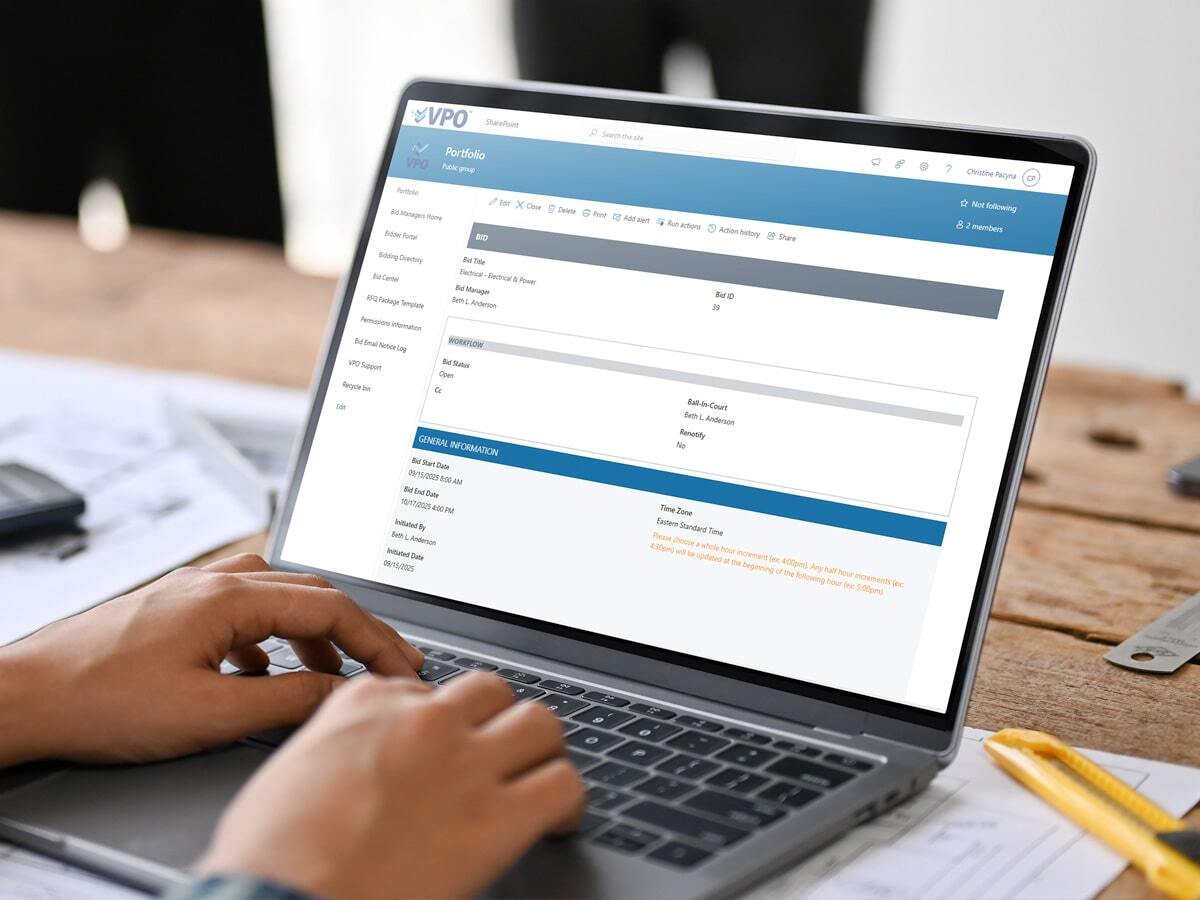
See how VPO helps project owners manage coordination, documentation, and scope control throughout the construction process.