
It's Monday morning. There's an email from leadership in your inbox. They want to know where the portfolio stands. Which projects are on budget. Where the risk is. Whether that contingency on the civic center job is going to hold through the end of the quarter.
20-40
Capital program managers spend an estimated 20 to 40 hours per month on manual reporting. That's up to a full work week every month spent assembling information instead of acting on it.
Source: VPO
You know the answers. You just need a few hours to pull them together.
That gap, between the question and the answer, is what this post is about.
It's not a knowledge problem. You know your projects. It's not a competence problem. You've been managing capital programs long enough to know what good looks like. It's a structural problem. The information exists, but it lives in too many places to retrieve quickly, and by the time you've assembled it, some of it is already out of date.
For most capital program managers, this is the most visible and most frustrating part of the job. Not the complexity of the work itself, but the time it takes to prove to the people above you that the work is under control.
Why the Reporting Burden Exists
The reporting burden isn't new. But it has gotten heavier as capital programs have grown and as leadership expectations around transparency have increased.
A generation ago, a monthly status meeting and a printed report were enough. Now leadership wants real-time visibility. Councils and boards want portfolio dashboards. Auditors want documentation trails. Grant administrators want compliance reports. And the program manager is expected to produce all of it, usually from the same fragmented set of spreadsheets and email threads that were never designed to support that kind of output.
The result is a reporting cycle that consumes a disproportionate amount of a program manager's time without adding anything to the actual management of the program. Hours spent formatting reports are hours not spent catching cost problems early, coordinating with contractors, or reviewing RFIs before they become change orders.
"Leadership asks for updates and we have to pull that information from multiple sources."
That sentence describes the daily reality of construction project management for a large portion of public sector capital program managers. It isn't a complaint about leadership. It's a description of what happens when the systems that manage projects and the systems that report on them are not the same system.
What Leadership Is Actually Asking
35%
The average construction project experiences a 35% increase in scope from original contract to closeout. Tracking that growth across a portfolio, in real time, is not a spreadsheet problem. It's a systems problem.
Source: FMI
It's worth unpacking what leadership actually wants when they ask for a portfolio update, because the answer is simpler than the process of producing it suggests.
They want to know three things. Are the projects on track? Where are the risks? Are there any decisions that need to be made at their level?
That's it. They don't need the full change order log. They don't need the RFI register. They don't need the line-by-line budget breakdown for every active project. They need a clear, current, trustworthy summary of where things stand, with enough detail to ask intelligent questions and enough confidence to report upward themselves.
The problem is that producing even that simple summary requires touching every project file, reconciling numbers that may not agree with each other, and making judgment calls about what to include and what to leave out. The summary looks simple. The work behind it isn't.
"It's hard to get a clear picture of where projects stand."
When that's true at the project level, it's compounding at the portfolio level. A program manager who can't get a fast read on a single project certainly can't get a fast read on twelve of them.
The Documentation Problem Nobody Talks About
15%
Programs that cannot demonstrate compliance through organized documentation face an estimated 15% increase in financial exposure.
Source: VPO
There's a related problem that sits underneath the reporting burden and makes it worse: the decisions that drive cost and schedule changes are often not documented in any retrievable way.
A direction gets given on a site walk. An approval gets communicated over the phone. A scope change gets agreed to in a meeting where nobody took formal notes. Six months later, when the contractor submits a change order for that work, nobody has a clean record of when the direction was given, who gave it, or what the agreed scope actually was.
This isn't negligence. It's what happens when project communication runs through email and text and verbal conversation, and there's no consistent place for decisions to land.
The cost of that missing documentation shows up in a few specific ways. Change order disputes that take weeks to resolve because nobody can produce a clear paper trail. Compliance gaps that create liability exposure when auditors ask for records that don't exist in any organized form. And reporting that can't be fully trusted because the numbers in the budget don't reflect the full picture of what's been committed and approved in the field.
"Most communication happens through email, which makes it hard to track decisions later."
Construction documentation isn't just a paperwork requirement. It's the foundation that confident reporting is built on. You can't produce a trustworthy portfolio summary if the underlying project records aren't trustworthy. And the records won't be trustworthy if the decisions that drive them aren't being captured in a consistent, retrievable way.
Further Reading: Construction Documentation: What to Track, Why It Matters, and How to Do It Well A practical guide to construction documentation for capital programs, including what records to maintain, how to structure them, and what auditors and leadership actually need to see.
What Confident Reporting Actually Requires
Confident reporting isn't about producing better reports. It's about having a system where the information behind the report is already current, already organized, and already in one place before anyone asks for it.
That means a few things have to be true at the program level:
Financial tracking and project communication have to be connected.
If the budget lives in a spreadsheet and the decisions that affect the budget live in email, the budget will always lag behind reality. The connection has to be structural, not manual.
Change orders, RFIs, and cost commitments have to be logged close to when they happen.
Not at month end. Not when someone gets around to it. The value of current financial data degrades quickly in a fast-moving program, and a number that was accurate last week may not be accurate enough to make a decision on today.
The portfolio view has to exist without someone building it.
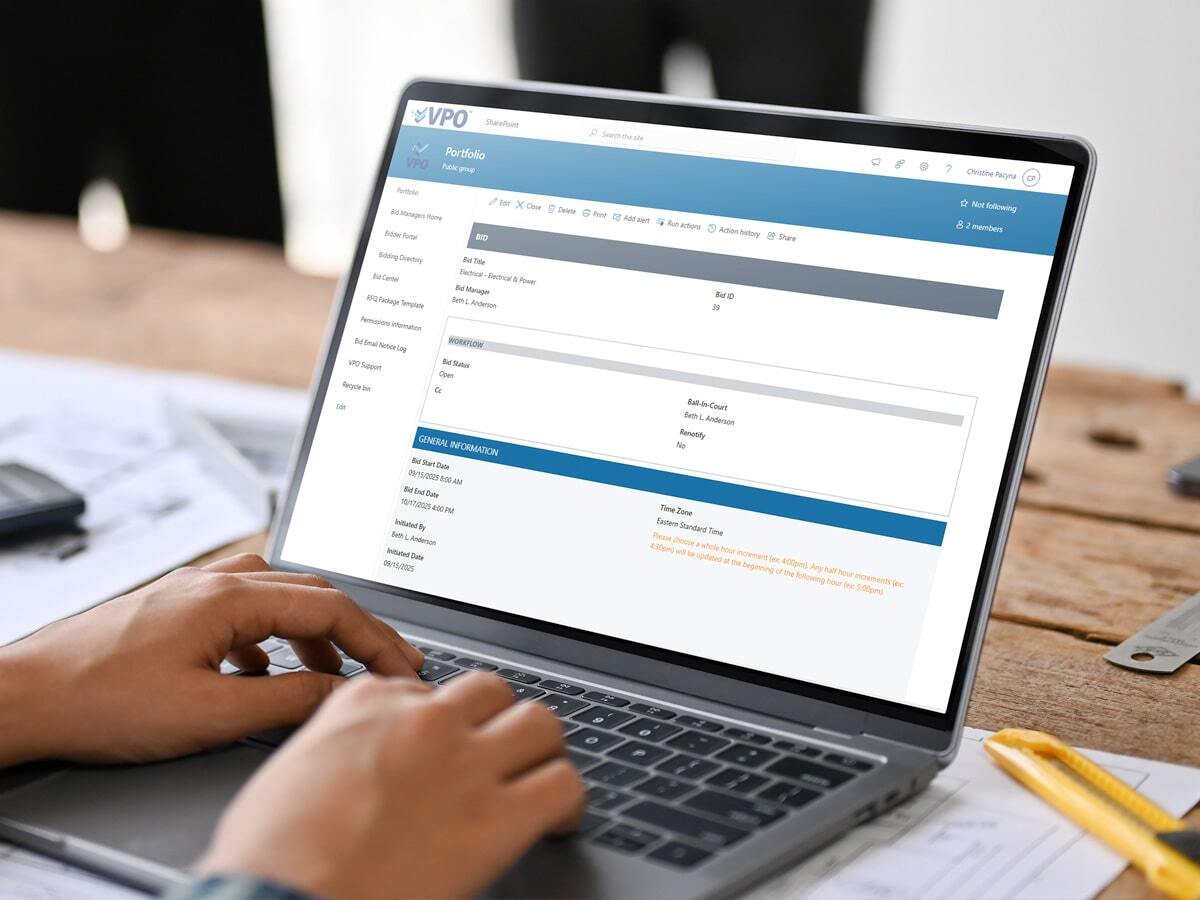
A program manager shouldn't have to spend two hours assembling a portfolio summary every time leadership asks a question. That summary should exist as a live reflection of the underlying project data, updated automatically as the projects move.
Documentation has to be a byproduct of how the team already works, not an additional task.
If capturing a decision requires a PM to stop what they're doing and fill out a form, it won't happen consistently. The best construction document management systems make documentation the natural output of normal project activity.
Further Reading: Construction Project Management Best Practices for Capital Programs What a well-run capital program looks like operationally, and the management practices that make consistent, confident reporting possible.
The Difference It Makes
When the system is working, the Monday morning email from leadership stops being a half-day project. It becomes a ten-minute task. You open the portfolio dashboard, confirm the numbers are current, write three paragraphs, and send it.
That's not a small thing. Recovering twenty to forty hours a month of reporting time gives a program manager the bandwidth to do the work that actually moves projects forward. Earlier identification of cost risks. More time with contractors before problems escalate. Faster turnaround on RFIs and submittals. Better preparation for the decisions that leadership actually needs to make.
The program doesn't just look better managed. It is better managed, because the people running it are spending their time on management instead of on reporting about management.
Further Reading: What Is a PMIS? A Guide for Public Sector Program Managers What a project management information system actually does, what to look for when evaluating one, and how to know when your program is ready for the transition.
Closing the Gap
The gap between your budget and your boss's questions is not going to close by working harder or producing more detailed reports. It closes when the information behind those reports is current, connected, and retrievable without a manual assembly process.
That's what the last two posts in this series have been building toward. The cost overruns described in Post 1 and the spreadsheet limitations described in Post 2 aren't separate problems. They're the same problem at different stages. Information that isn't captured in real time becomes a budget that can't be trusted. A budget that can't be trusted becomes a report that takes hours to produce and still leaves room for doubt.
The fix is a connected system. One where the communication, the documentation, and the financial tracking aren't running on separate tracks. Where cost events surface when there's still time to manage them. Where the program manager can answer the Monday morning email before it's even sent.
That's what good construction project management workflow looks like at the program level. Not more complexity. Just better connection between the work that's happening and the information that needs to exist about it.
 This is the final post in our three-part series on cost control in capital programs.
Read Part 1: Why Your Contingency Always Runs Out
Read Part 2: The Spreadsheet Worked Fine, Until It Didn't
If you're managing a capital program and want to see how VPO closes the gap between your project data and your leadership reporting, book a demo.