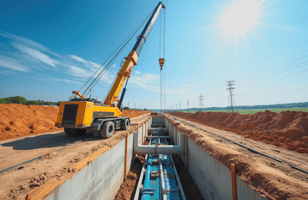

Across North America, organizations are investing billions of dollars to expand manufacturing capacity, modernize aging infrastructure, and build the facilities needed for future growth. Steel producers are expanding mills. Semiconductor manufacturers continue investing in fabrication plants. Utilities are replacing aging generation and transmission assets while public agencies modernize transportation, water, and civic infrastructure.
On the surface, these appear to be very different industries responding to very different market forces. At VPO, however, we've noticed they often encounter the same challenge. As projects become larger, portfolios become busier, and stakeholders become more numerous, organizations don't simply need more resources. They need better ways to make decisions across increasingly complex environments.
Growth has a way of exposing weaknesses that were easy to overlook when programs were smaller. Processes that once worked smoothly begin slowing under additional demand. Communication paths become more difficult to maintain. Experienced leaders find themselves reviewing more information, attending more meetings, and making more decisions than ever before. The challenge isn't that people become less capable. It's that the systems supporting them often haven't evolved at the same pace as the work itself.
Capacity isn't just about production
When organizations talk about capacity, the conversation usually centers on physical assets. More production lines. More facilities. More projects. More people. Those investments are essential, but they're only one side of the equation.
Every major capital program also depends on decision capacity. How many projects can an owner's representative effectively oversee before important conversations begin slipping through the cracks? How many design reviews can engineering leaders meaningfully participate in before approvals become rushed? How many competing priorities can executives manage before decisions become increasingly reactive instead of deliberate?
These aren't staffing questions alone. They're governance questions.
One lesson we've learned at VPO is that organizations often respond to growth by asking for more reporting. While additional reporting has its place, it rarely addresses the underlying issue. Leaders usually aren't struggling because they lack information. They're struggling because critical information exists in too many places, arrives without context, or fails to reveal how one decision is influencing another. More reports rarely solve that problem. Better visibility into the relationships between decisions, commitments, discussions, and project information often does.
Growth exposes systems that no longer scale
One of the interesting things about growth is that it doesn't usually create new organizational problems. It exposes existing ones. A communication process that worked well across three projects may become inconsistent across fifteen. Governance that depended on a handful of experienced individuals becomes increasingly fragile as portfolios expand. Decisions that were once easy to trace become scattered across email threads, meeting notes, spreadsheets, and disconnected project systems. None of these issues is necessarily caused by growth. Growth simply makes them impossible to ignore.
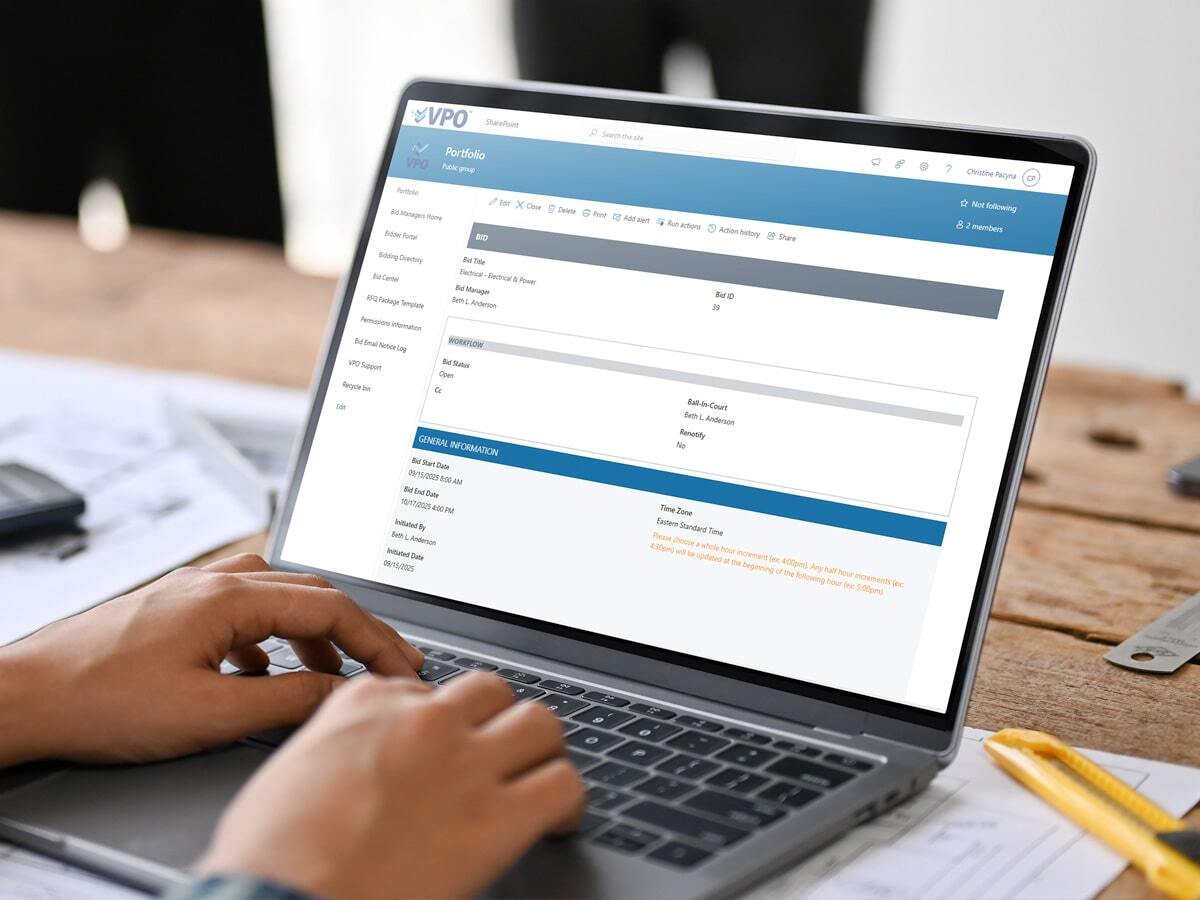
One of the reasons VPO was designed around connected project information is to reduce the effort required to understand the history behind a decision. When project discussions, commitments, documentation, and approvals remain connected, owners spend less time reconstructing context and more time evaluating what needs to happen next. That's especially important in large capital programs where dozens of decisions may be influencing one another at the same time.
The goal isn't simply to centralize information. It's to make the information surrounding important decisions visible enough that experienced people can apply their judgment quickly and confidently.
Scale governance before you scale projects
Organizations preparing for major capital investments devote significant attention to financing, procurement, staffing, and construction planning. Those conversations are essential, but they often overlook another question.
Will the organization's decision-making processes scale as effectively as the projects themselves?
Can leadership recognize recurring issues before they begin affecting multiple projects? Can new team members understand why earlier decisions were made without relying entirely on institutional memory? Can executives identify patterns across the portfolio before those patterns begin affecting schedules, budgets, or stakeholder confidence?
These questions become increasingly important as capital programs grow because complexity compounds over time. Every additional project introduces new stakeholders, new decisions, new dependencies, and new opportunities for information to become disconnected. Organizations that continue relying on the same governance practices that served them well during smaller programs often discover that growth has quietly outpaced their ability to maintain visibility.
That's one of the principles that has shaped VPO from the beginning. Our platform wasn't designed simply to manage documents or automate workflows. It was designed to help owners strengthen governance by connecting the information, decisions, and accountability that experienced leaders rely on every day. Better visibility doesn't replace good judgment. It gives good judgment a stronger foundation.
Growth demands more than capacity
Today's wave of capital investment is creating tremendous opportunity across manufacturing, infrastructure, utilities, and industrial construction. Yet the organizations that navigate that growth most successfully won't necessarily be those with the largest budgets or the biggest project teams.
They'll be the organizations that recognize growth requires more than additional capacity. It requires governance that scales, communication that remains connected, and decision-making processes that continue providing clarity even as complexity increases.
The strongest owner organizations build those capabilities before they need them, not after an expanding portfolio begins revealing the cracks. That's the philosophy behind VPO. We built the platform to help owners strengthen governance, improve visibility, and connect the decisions that shape project outcomes long before those outcomes become visible themselves.
Preparing for growth starts long before construction begins.
The strongest capital programs don't scale through additional reporting alone. They scale by creating clear governance, stronger communication, and better decision-making before complexity begins working against them.
Download VPO's Project Management Plan Starter Guide to explore practical ways to strengthen the governance framework behind every successful capital project.